David Bedrick presents
The Foundations of UnShaming Training
Stop fixing yourself. Start believing in yourself.

A radical departure from the paradigm you already know
Almost everything you have been taught about healing asks the same question: what is wrong with you, and how do we fix it. Diagnose the symptom. Correct the behavior. Manage the feeling. UnShaming asks a different question entirely. Not what is wrong with you, but what is this symptom trying to tell you. Your anger, your shutting down, your hunger, the voice that criticizes you at 2 a.m., none of it is a malfunction. It is intelligence, carrying a story that has not yet been heard. This is not a gentler version of the conventional paradigm. It is a departure from it.
What shame actually is
Shame is not a feeling. It is a witness, an internalized way of looking at your own experience that denies it, dismisses it, and gaslights it. It is built the moment someone, or some system, could have said I see you, I believe you, and instead said nothing, or said you are too much, or said that is not what happened. Once that witness moves inside you, it leaves two conclusions running underneath everything: I don't matter, and something is wrong with me. Whole parts of a person go offline trying to live inside those two sentences. That exile is the shadow.
What UnShaming does instead
UnShaming is a witnessing function, and it works against shame’s denial, dismissal, and gaslighting with three moves of its own. Respecting what is actually there, instead of what should be there. Relating to it directly, rather than managing it from a distance. And a kind of radical belief, what I sometimes call seeing, feeling, and believing someone all the way down, including the parts of them that have been exiled. This training will introduce you to that paradigm, give you language for what shame is and what unshaming is, and more importantly, give you stories that let you feel it rather than just understand it. You will see it worked with somatically, in the body, not only in the mind, because so much of what we carry was never put into words in the first place.
What happens in the training
The training is offered in three parts, so you can take them in whatever order serves you, and return to any one of them again.
1
The teaching
It opens with a line from a poem a third grader wrote: math is when numbers are angry at you. That is the pure, relational truth of a child’s experience, before anything has taught her to doubt it, and the talk is built around what happens to that kind of knowing as we grow. Robert Bly called it the shadow bag, the sack we drag behind us, stuffed with every part of ourselves that got put away. This talk walks through three questions. What do we lose. How do we lose it. And how do we get it back. It shows how trauma that goes unwitnessed, and the operations of denial, dismissal, and gaslighting, are what sever us from parts of ourselves in the first place, pushing them into that bag.
Two stories carry the whole arc. A woman spent years being told, including by her own spiritual teacher, that she needed to be more open. Open to life, open to people, open to love. The conventional approach, the one that tries to fix, would have kept pushing her toward more openness. Unshaming went the other way. It believed in her closeness, and inside that closeness found exactly what had been exiled, her needs, her boundaries, her right to a no.
The second story is a stutter. Where the dominant paradigm wants a stutter calmed, smoothed over, made to disappear, unshaming believes in the stutter itself, and finds, waiting inside it, force, power, even a poetic voice that had nowhere else to live. Both stories show the same thing from two directions, what gets lost, how it gets lost, and what it takes to bring it back online, not by fixing, but by believing.
The talk also names the different levels at which shaming happens, personal, relational, cultural, where something like sexism shames whole categories of people, and spiritual, where even a path meant to liberate someone can be used to shame the very parts of them that needed protecting. There is a phrase I keep coming back to: the conventional paradigm leads us to cure ourselves of ourselves. Unshaming is the reversal of that sentence.
2
The conversation
A wide-ranging interview, in dialogue rather than lecture, moving through real stories, a depressed man whose body held a grief he had never spoken, the stomach aches that stopped a childhood’s violence when nothing else could, the witness statements of the Nassar case and what they reveal about where an injury actually lives, the Kataribe of Japan and what it means to carry someone else’s story as your own, the wounded healer as the canary who tells the rest of us something true. This is where the paradigm stops being an idea and becomes something you can feel happening.
3
The questions and the live work
Students bring their real questions, and the answers become live work.
A woman who grew up surrounded by shaming witnesses asks what a true witness looks like, and the conversation moves into her anger, which she finds first in her hands and fists.
Another asks whether shame protects us and keeps us safe in the tribe, and David shows why his view of shame, neither “good shame” nor “toxic shame,” changes the answer, and what returns when our natural reactions come back to us.
Another asks what happens when religion makes God the highest witness, and that witness shames.
And a woman carrying a spiritual emergency and a stack of diagnoses asks the question many people are afraid to ask: could addressing shame actually be healing me? David witnesses both the part of her that believes it and the part that doubts.
This is where students consistently say the framework becomes concrete: watching the witnessing functions practiced in real time, with real people and real difficulty.
The perfect companion
The Unshaming Way Workbook
A full program of exercises and reflection questions in David's approach, from North Atlantic Books. The print edition for writing your way through, or the audiobook, which came out beautifully. Available wherever books are sold.
Get the WorkbookWhere this leads
This training is a starting point. From here, the path continues into live courses, masterclasses, the Trauma-Work Bundle, and the ten-month certification for practitioners who want to work this way with others.
In their words












About David
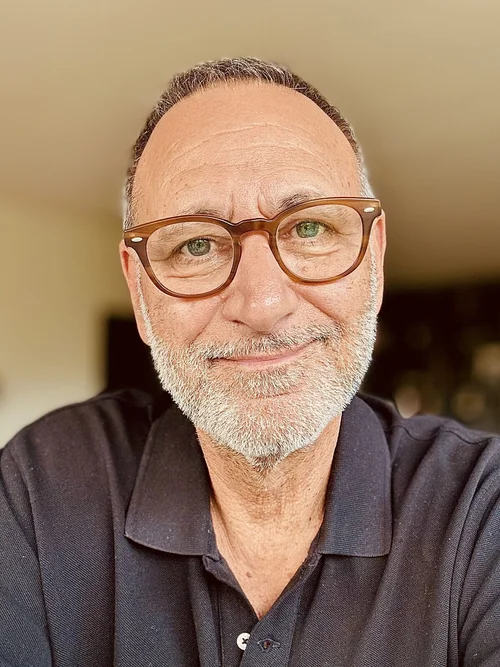
David Bedrick, J.D., Dipl. PW
David is the founder of the UnShaming Way, a depth-psychology approach built on one conviction: your symptoms, struggles, and survival strategies carry intelligence, not pathology.
He is the author of five books, including The Unshaming Way (North Atlantic Books), endorsed by Gabor Maté, MD. He has trained hundreds of clinicians and taught thousands of individuals. Before psychology, he practiced law; before law, he survived the home that taught him everything the books later confirmed.