
Process-Oriented Facilitation
10-Month Certification Training
with David Bedrick
Clients come to you to be witnessed - seen for their deepest experiences, feelings, stories as well as their meaning.
They come to be Unshamed: To have you help them discover the truth, wisdom, and intelligence hidden in their difficulties and disturbances.

In this certification program, you will:
-
We’ll be focusing first on physical symptoms and how to access the body as a doorway to the emotional life and intelligence of those we serve. We will expand our understanding of how and when to access the soma and integrate them with other intervention methods to support just about any difficulty people face.
-
We will work with movement, via posture, hand motions, body language, and dance - an important method so people can then learn to express what is in their body.
-
Learn how to integrate voice with the soma and movement; supporting people with accessing body intelligence and wisdom, with sound and verbal communication. We’ll also learn how to deepen people’s process through using sound and music.
-
Deep experiential learning that comes when one embodies and occupies split-off shadow aspects of themselves, building and strengthening the inner wiring, the pathway, to the freedom of accessing more of their whole selves.
-
So much goes on in the psyche that shows up as inner dialogue, especially and importantly when it comes to inner criticism, self-hatred, shame, introjected parental figures and internalized oppression. Playing it out in dramatic role play can be a powerful intervention to powerfully raise awareness and work out conflicts and tensions.
-
Using our eyes, ears, intuitions and the methods above to fill in the gaps that allow these stories to complete themselves.
-
Learning how to discern the client’s consent when it is not made explicit through watching for minimal cues and signals as we proceed with each intervention. We’ll spend significant time learning about these communications so that the interaction we are having with our client is not re-abusing or re-traumatizing.
-
Learn the functions of those who witnessed or didn't witness an abusive event or history. These witnesses are crucial keys to understanding how abuse lives in our clients and what the healing path looks like.
While a perpetrator causes the initial harm, the witness holds the greatest power in healing. Trauma isn't solely caused by the initial injury, but by the absence of validating witnessing. When pain is met with a loving witness—one who believes, validates, and supports without gaslighting or blame—healing begins, and shame doesn't freeze into trauma.
Conversely, without a loving witness, clients often internalize a shaming witness—a voice that tells them they are to blame or deserved what happened. This internalized shame and the lack of compassionate witnessing is the true root of trauma, freezing the healing process when natural reactions like pain, anger, and fear are suppressed and denied.
Therefore, unshaming, a skilled and aware form of witnessing, is presented as the essence of trauma healing.
-
The Earth is our home and our connection to the Earth is not only one of the great wisdoms of most Indigenous cultures, but also our indigenous selves. We’ll be working with a number of Earth-based interventions: 'go-to' Earth spots or locations in dreaming, directionality, polarities and magnetism. We'll be using these connections to work with trauma and help people find their path.
-
You'll learn to work with trauma using the course's core interventions alongside a multitude of methods and awareness-oriented facilitation options. We move beyond individual impact to address the broader context, recognizing that trauma ripples through families, communities, and entire societies. This expanded view is the foundation for lasting change, moving us toward addressing root causes and wholeness.
Key focus areas include:
Integrate Dissociation: We'll look at the intelligence of dissociation, learning to help clients find the optimal distance—moving closer to or safely away from—traumatic experiences.
Addressing Inner criticism and Internalized Oppression: Understanding these integral parts of the trauma story, offering pathways to liberate clients from these restrictive narratives.
Boundary Recovery and Re-traumatization: Learn to support people in recovering boundaries to prevent them from being re-traumatized again and again in their daily lives.
Finding the Inner Healer: Discover how to help people connect with and cultivate their inner healer and innate resources.
Working with Detachment: Explore methods for working with death and detachment as part of the healing and integration process.
These skills will be applied to areas of healing beyond abuse and trauma, including addictive tendencies and dependencies, deep feeling states (anxiety, depression, jealousy), relationship difficulties, life/career paths, body shame, esteem, and more.
What past students have said…

Being certified in Process Facilitation means:
╰┈➤ That you will be able to touch the sources of their depth and reach into the heart of their struggles with skills that work with the body/soma, movement/dance, voice, inner criticism, role play, abuse and trauma, and the Earth.
╰┈➤ It means you will have a fine awareness of how to proceed when issues of abuse and trauma arise in addition to unique skills and interventions in serving their healing and gifts to unfold.
╰┈➤ It means you will have a unique and refined clarity about the psychological ethics that arise as you proceed in facilitating your clients' healing and flowering.
╰┈➤ It means your heart and mind will view your clients from a new paradigm or healing - one that doesn't pathologize, but instead sees the seed of new life in all that they bring to you.
╰┈➤ It means you will have a level of mastery in a powerful vision and skill set - one that treats your clients in ways that they have likely never experienced before. In ways that will shape and shift their lives in profound ways.
Learn to see with new eyes the medicine, magic, and miracles that will make you practice a meditation, a prayer, a spiritual calling.
ETHICS
TRAUMA is one of the most urgent topics in the world of healing today. Yet our collective understanding is full of gaps.
Too often, there’s little clarity about what trauma really means, how it shows up in people’s lives, and what it takes to address it. Somatic work has brought enormous breakthroughs, but entering overwhelming experiences without preparation can cause harm. Before we guide people into the body, they need self-awareness, empowerment, and clear ethical safeguards. Without these, the work risks being re-traumatizing rather than healing.
Another overlooked piece is what happens when someone shares their story. In a world that often denies, dismisses, or minimizes trauma, people learn to see themselves through shaming eyes. Instead of compassion, they internalize judgment—and healing becomes about “getting rid” of parts of themselves. This is the shadow of trauma, and unless we address it, even the best methods fall short.
As coaches, healers, and therapists, we must also recognize that most people don’t even know how to tell their own story. They repeat the narratives others have given them: “This is what’s wrong with me. This is what I need to stop.” Trauma teaches people to distrust themselves. Left unchecked, this cycle of self-shaming shapes the very way they try to heal.
There is still so much to learn and teach:
╰┈➤ How trauma unfolds from unaddressed abuse
╰┈➤ The link between trauma and the ability to set boundaries
╰┈➤ The power and intelligence of dissociation
╰┈➤ The gifts hidden inside trauma
╰┈➤ How to use movement, voice, and the body—not just feelings—as pathways to healing
One critical piece is almost never talked about: Trauma survivors often fawn or struggle to voice their true needs. This makes it essential for facilitators to develop the ethical grounding and skills to notice subtle cues—so they can tell whether their guidance is truly healing or causing harm.
In this 10-month program you will learn all of this and so much more.
What past students have said…
Mastery in the training content will be developed by:
Two hour live training sessions 3 times per month. The sessions include theory, exercises and modeling the interventions. Further into the training you will facilitate another student while I coach you in order to deepen the learning process.
Meeting in small groups 3 times per month to to practice learning and specific elements of the training.
Individual feedback from David within classes and small group work about your awareness and skills development.
Reading about one book per month from recommended book list. A digital copy of David's book, "You Can't Judge a Body by Its Cover" is included with the training. All other books are purchased independently.
Each aspect of the training curriculum are key components in the certification process of this training. A certificate in Process-Oriented Facilitation Training is issued upon successful completion of the program.

The Program Details:
This training is all online via Zoom classes. All sessions will be recorded for you to access if you miss a class or simply would like to review. Please note that active participation is required for this training; participants are expected to attend live sessions and practice sessions with the exception of emergencies and personal challenges.
In order to best serve students, facilitate learning and provide feedback for certification in this program, the cohorts are kept small at a maximum of 24 students.
We have two cohort options to choose from:
Monday Cohort: classes on 3 Mondays a month at 4pm-6pm Pacific time
Thursday Cohort: classes on 3 Thursdays a month at 11am-1pm Pacific time
Applications for 2027 are now open.
Investment:
Pay in Full - $7500 USD
$1500 non-refundable deposit will be due upon acceptance into the program to secure your spot.
The remaining $6000 will be due by January 31st.
10 Month Payment Plan
$1500 non-refundable deposit will be due upon acceptance into the program to secure your spot.
A monthly payment plan of 10 x $600 will start by January 31st.
What past students have said…
MEET YOUR FACILITATOR:
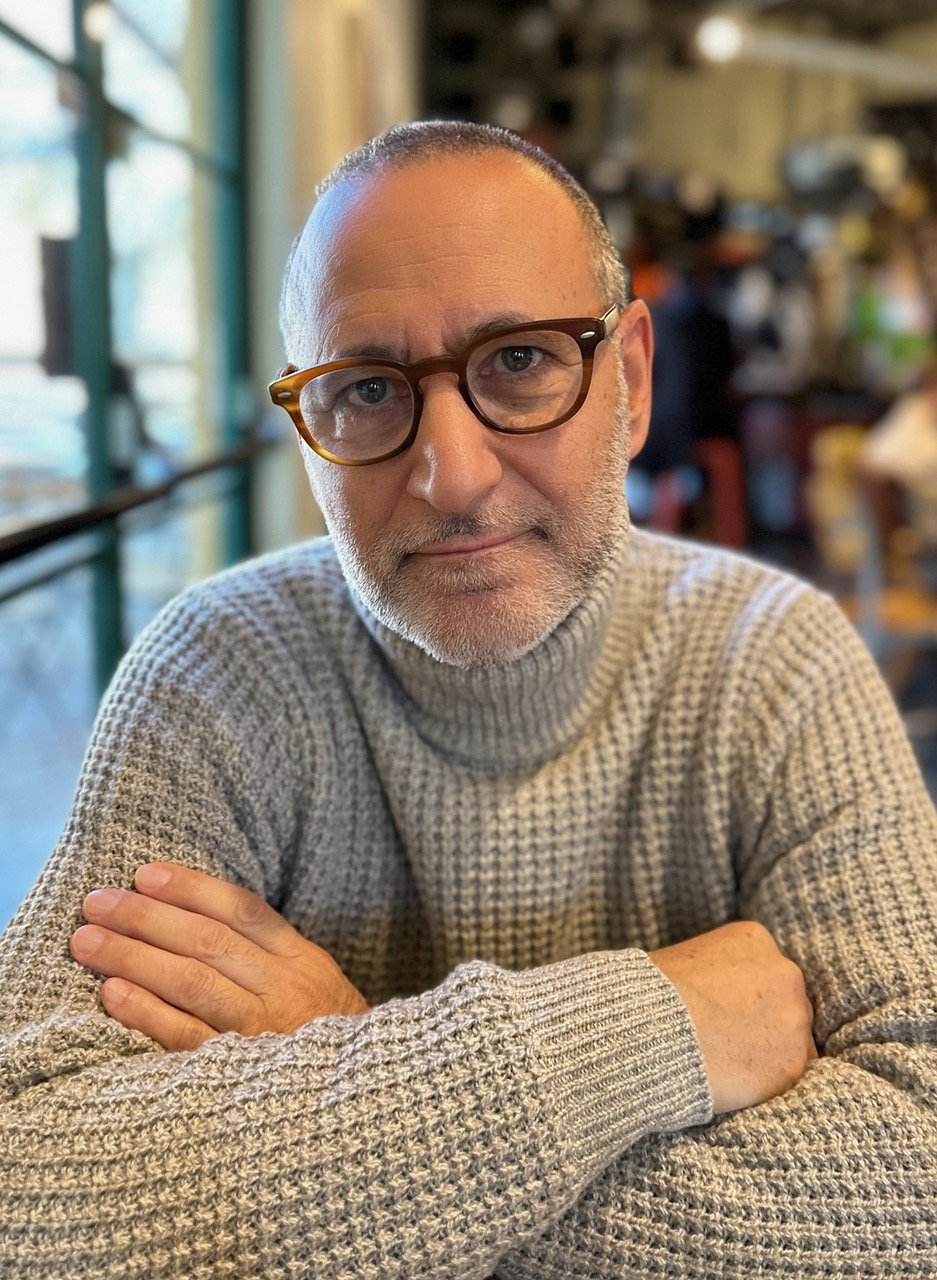
David Bedrick, J.D., Dipl. PW, is the founder of the UnShaming Way — a depth-psychology approach built on one conviction: your symptoms, struggles, and survival strategies carry intelligence, not pathology. He is the author of five books, including The Unshaming Way (North Atlantic Books), endorsed by Gabor Maté, MD. He has trained hundreds of clinicians and taught thousands of individuals. Before psychology, he practiced law; before law, he survived the home that taught him everything the books later confirmed. That is his deepest credential: he knows both harms — the violence, and the denial of it — from the inside. His work has appeared in Psychology Today and reaches hundreds of thousands of readers through his essays on trauma, shame, and the witness.
© 2026 David Bedrick
LEARN
• Free Guide: The Anatomy of Shame
• UnShamed TV
• Blog
• Books
• Podcast
• Video, Audio & Other Media
• Psychology Today Articles
WORK WITH DAVID
•The Foundations of UnShaming
• UnShamed Monthly Medicine
• All Courses